

Dental Chews for Small Dogs vs. Large Dogs
Choosing dental chews for small dogs vs large dogs is less about a simple weight range and more about matching the chew to the dog in front of you: jaw size, bite strength, chewing pace, and individual dental history all matter. A well-chosen chew can add useful mechanical work to a daily oral-care routine, while the wrong size or texture can be frustrating or unsafe. The goal is not the biggest or hardest option. It is a chew your dog can work through thoughtfully, under supervision, as part of a consistent wellness protocol.
Explore natural dental chews for smaller dogs.
That distinction matters because dental plaque begins as a biofilm on the tooth surface, and home care works best as a layered routine. A peer-reviewed review of canine periodontal care describes tooth brushing, appropriate oral products, chew toys, and regular professional care as complementary tools, not substitutes for one another.1
Why dog size changes the dental-chew decision
Small and large dogs may have different dental-care pressures, but every dog benefits from an individualized approach. Smaller dogs can have a relatively full set of teeth in a compact jaw, which can make close contact between teeth more likely. That is one reason a gentle, appropriately sized chew and regular brushing deserve attention rather than being treated as an occasional extra.
Large dogs bring a different practical question: will the chew be substantial enough to encourage measured chewing without becoming a small, easily swallowed piece? They may also apply more force, so “harder” is not automatically better. Veterinary guidance consistently emphasizes that a chew should be sized for the dog and that very hard options can be rough on teeth. The useful middle ground is a shape and texture that creates chewing engagement without asking the dog to overpower an object.
Breed size is only the first filter. A careful, slow-chewing terrier may need a different option than a similarly sized dog who gulps food. An older dog with a sensitive mouth needs a different conversation than a young, enthusiastic chewer. Use size to narrow the field, then let chewing style and veterinary guidance make the final call.
Dental chews for small dogs: prioritize proportion and a gentler chew
For small dogs, proportion is the safety baseline. The chew should be large enough that it cannot simply disappear into the mouth, yet manageable enough for a small jaw to hold and work. A piece that is too large can lead to ineffective chewing; one that is too small can become a swallowing hazard. Supervision is especially important when introducing any new chew.
Texture matters just as much. Small dogs often do well with a gentler, flexible whole-food option that encourages steady chewing rather than a rigid object that asks too much of a smaller bite. Single-ingredient rabbit ears can be a thoughtful starting point for many gentle chewers because the format offers chew time without relying on starches, binders, artificial flavors, or vague ingredient lists. Navan’s rabbit ears are a straightforward option to consider when your dog’s chewing style calls for a lighter daily ritual.

Small-dog checklist
- Choose a chew that is substantial relative to your dog’s mouth, not a tiny treat-sized piece.
- Favor a manageable texture over maximum hardness.
- Observe the first few sessions, including how your dog holds, chews, and finishes the item.
- Keep tooth brushing in the routine. Chewing is an addition to brushing, not an alternative to it.
- Ask your veterinarian for a personalized recommendation if your dog has loose teeth, marked tartar, mouth sensitivity, or changes in eating behavior.
Dental chews for large dogs: look for duration without excess hardness
For many large dogs, the challenge is finding a chew that offers enough structure to last through real chewing. A chew that disappears in seconds may be more like a snack than a meaningful oral-care activity. But durability should not mean choosing the hardest possible item. The right option is one that gives the dog something to work through while remaining appropriate for that dog’s individual bite and dental history.
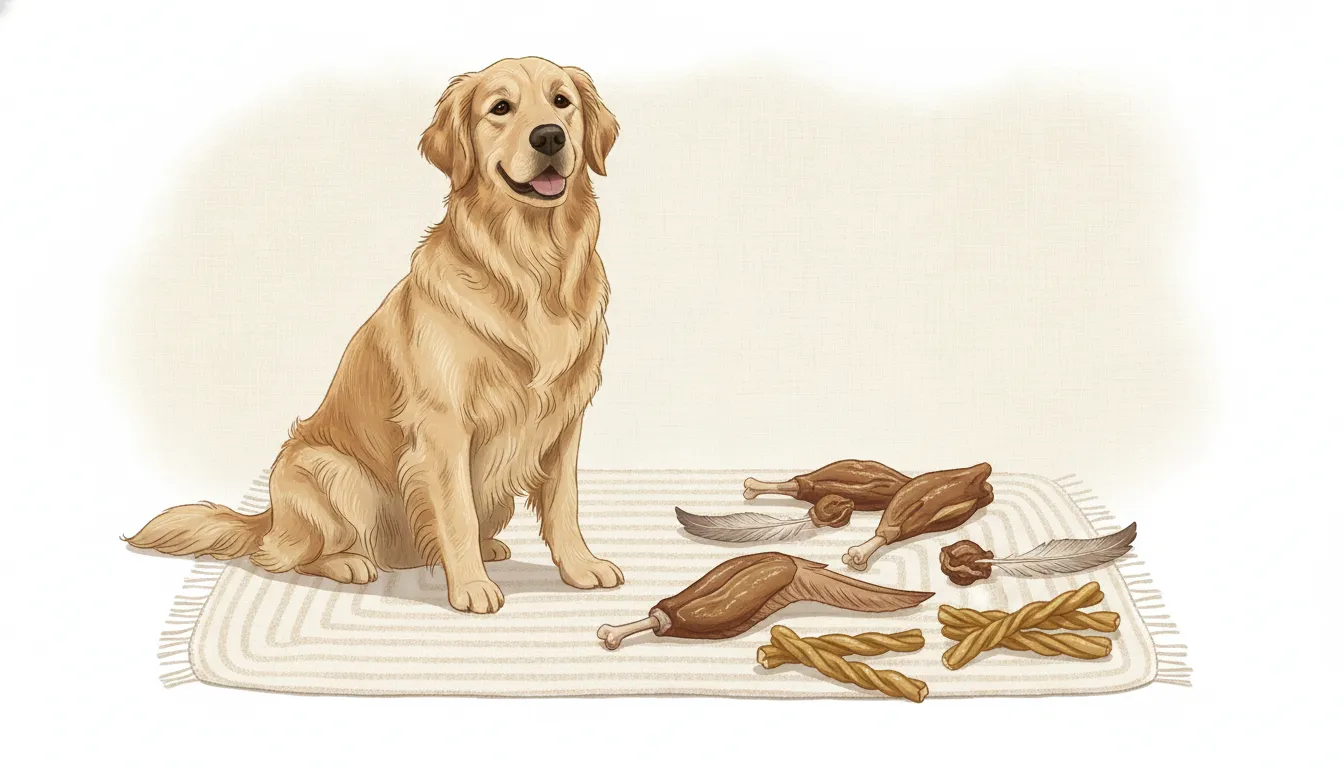
For active medium-to-large chewers, a thicker natural format can be useful. Navan’s duck wings offer a more substantial option for dogs who need more engagement, while duck necks provide another single-ingredient format to assess with your dog’s chewing style in mind. If your dog is an especially persistent chewer, collagen sticks may be a longer-lasting option.
The important point is not to assume that a large dog needs an oversized or ultra-hard chew. Watch the actual chewing pattern. If your dog tries to swallow large pieces, reduce access and speak with your veterinarian about safer options. If you hear sharp cracking or your dog seems uncomfortable, discontinue the chew and get professional guidance.
Small vs. large dog dental chews: a practical comparison
| What to assess | Small dogs | Large dogs |
|---|---|---|
| Chew size | Large enough to avoid easy swallowing, but comfortable for a small jaw. | Substantial enough to prevent rapid consumption and support supervised chewing. |
| Texture | Generally gentler and more flexible for smaller mouths and careful chewers. | More durable, but not chosen simply for maximum hardness. |
| Useful starting point | Single-ingredient rabbit ears for gentle chewing. | Duck wings, duck necks, or collagen sticks based on chewing style. |
| Supervision focus | Confirm the dog is chewing rather than trying to swallow the item. | Monitor force, large fragments, and any sign that the chew is too challenging. |
| Daily foundation | Brushing, appropriate chewing, ingredient literacy, and veterinary care. | Brushing, appropriate chewing, ingredient literacy, and veterinary care. |
Ingredient transparency is part of the comparison too. A dental chew should not need a long list of added starches or binders to be functional. Starches can feed plaque and undesirable bacteria in the mouth, which makes a whole-food, single-ingredient approach a sensible fit for owners who are building a more intentional daily protocol.
How to choose the right chew for your dog
- Start with body size, then adjust for the individual. Use your dog’s mouth size and body size as a first screen, but let their actual chewing behavior guide the final choice.
- Choose a natural format with a clear ingredient list. Look for a single-ingredient chew that avoids unnecessary starches, fillers, binders, artificial colors, and preservatives.
- Introduce one chew at a time under supervision. Observe how your dog grips it, whether they chew methodically, and whether pieces become too small to manage safely.
- Build it into a complete oral-care routine. Brush with dog-safe toothpaste, provide appropriately selected chewing opportunities, and maintain regular veterinary dental examinations. The American Veterinary Medical Association recommends veterinary dental checks at least annually.
- Use rotation thoughtfully. Different shapes can create different chewing mechanics. Learn more about rotating your dog’s dental chews as part of a varied, consistent wellness routine.
Professional cleanings remain an essential part of care when your veterinarian recommends them. At-home habits can support oral hygiene, but they do not replace a veterinary assessment or professional dental treatment. The American Veterinary Medical Association explains that anesthesia-free cleaning does not allow inspection or cleaning below the gumline.
Find the right natural chew for your dog’s daily dental protocol.
Frequently asked questions
Can small dogs eat the same dental chews as large dogs?
Not always. A chew made for a larger mouth may be awkward for a small dog to hold or work through, while a small chew can be too easy for a large dog to swallow. Select for your dog’s mouth size, chewing style, and veterinary guidance.
Why is size important when choosing a dental chew?
Size affects both safety and usefulness. A proportionate chew is easier for a dog to handle and more likely to encourage deliberate chewing. The wrong size can raise swallowing concerns or provide too little chewing time.
Do dental chews replace brushing a dog’s teeth?
No. Brushing remains a core part of at-home oral care. Dental chews can complement brushing and regular veterinary care by adding mechanical chewing to the routine.
What is the best texture for a powerful chewer?
Look for a format that is substantial enough to engage the dog without defaulting to maximum hardness. Monitor every new chew, and stop if you see discomfort, very large swallowed pieces, or excessive force.
How often should dogs have dental chews?
Frequency depends on the product, your dog’s diet, calorie needs, chewing style, and dental history. For a personalized routine, discuss frequency with your veterinarian and treat chewing as one part of a daily protocol.
A size-aware ritual is a better dental ritual
The best dental chew is not defined by the dog’s weight alone. It matches the dog’s mouth, chewing style, and daily care plan, with ingredients you can recognize and a format you can supervise. Start with thoughtful sizing, keep brushing and veterinary care central, and choose single-ingredient chews that support the kind of consistent wellness routine your dog can sustain.