

Dried Rabbit Ears for Dogs: A Practical Guide
Dried rabbit ears for dogs are whole rabbit ears preserved by drying, usually with the fur intact. Their visible single ingredient and light, crisp texture make them easy to assess before serving. They can be a useful part of a whole-food chew rotation when chosen carefully, introduced gradually, and offered only under direct supervision.
Explore Navan Rabbit Ear chews
The short answer: Choose rabbit ears with a one-item ingredient list, clear sourcing, and no added starches, glycerin, binders, flavors, or preservatives. Fur-on ears add insoluble animal fiber and a distinctive texture, but they are a complementary chew, not a complete meal or a digestive treatment. No chew replaces toothbrushing or professional veterinary dental care.
What are dried rabbit ears for dogs?
Dried rabbit ears are single-ingredient animal chews. Careful dehydration lowers moisture while preserving the ear's recognizable form. A well-made ear should look like the ingredient it claims to be, without an oily coating, uniform molded shape, or long ingredient panel.
Rabbit ears are relatively thin compared with dense bones or heavy chews. Many gentle and moderate chewers finish one in a short session, while determined gulpers may try to swallow large pieces. That difference in chewing style matters more than breed labels when deciding whether this format is suitable.
Why processing and transparency matter
Processing affects texture, storage, and consistency. Look for a brand that explains how the ears are sourced and dried, then inspect each ear before serving. Natural variation in shape and color is expected. Moisture, mold, an unusual odor, sharp fragments, or damaged packaging are reasons to discard the chew.
Ingredient transparency also makes rotation easier. If the label lists only rabbit ear, owners can introduce one animal protein at a time and monitor their dog's response without trying to identify hidden binders or flavorings.
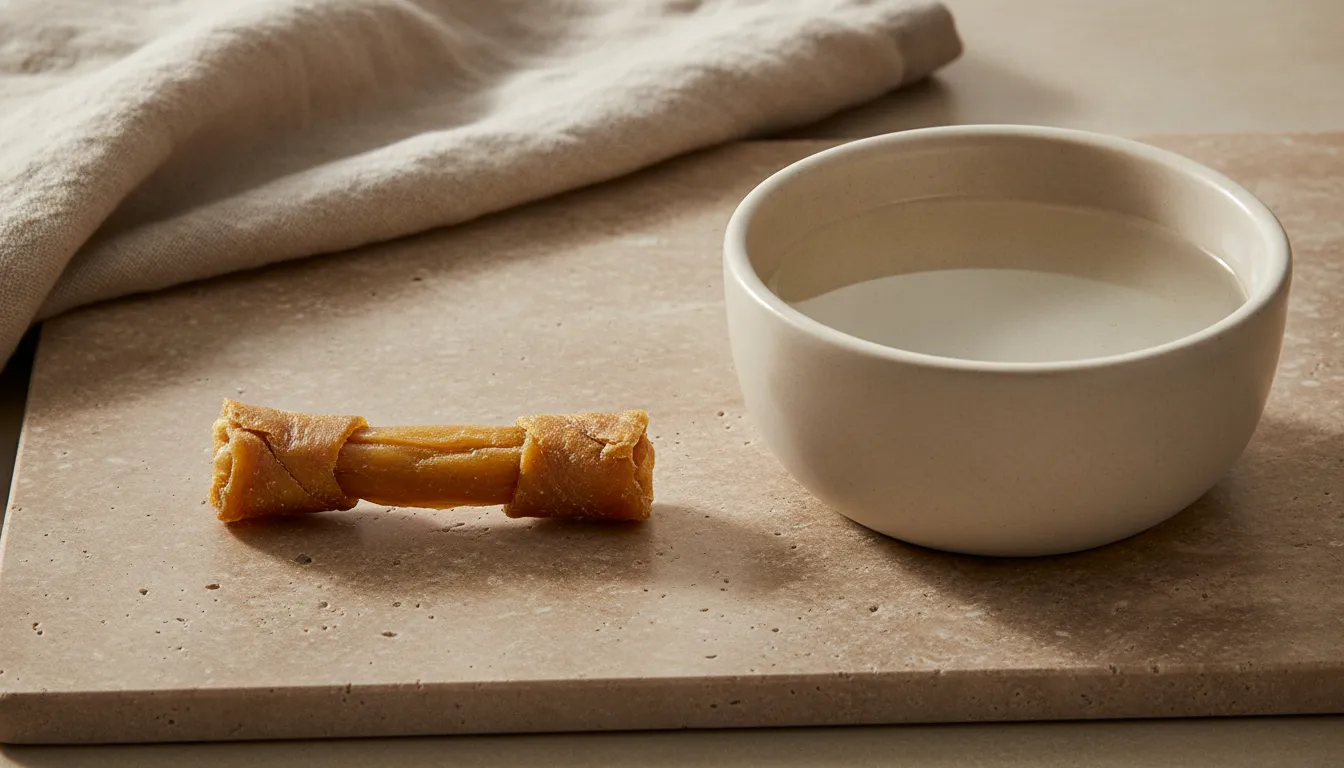
What does the fur on rabbit ears do?
Fur is made largely of keratin and is not fully digested by dogs. In practical terms, it behaves as insoluble animal fiber and may be visible in stool after a fur-on ear. The fur also changes the chew's texture and preserves more of the original whole-food form.
Keep expectations measured: fur is not a cleanser, detox treatment, or cure for digestive problems. Claims that it "sweeps" the intestines go beyond the available evidence. Owners should choose fur-on ears for ingredient simplicity and texture, not for a promised medical outcome.
What to watch after the first serving
Introduce one new chew at a time. Afterward, watch for vomiting, diarrhea, constipation, repeated straining, lethargy, reduced appetite, gagging, or other discomfort. Stop serving the chew and contact your veterinarian if symptoms occur. Dogs with a history of obstruction, pancreatitis, dietary restrictions, or medically managed conditions need individualized veterinary guidance before trying a new chew.
How can rabbit ears fit an oral wellness routine?
Chewing creates friction across some tooth surfaces, which can help loosen soft debris while giving a dog a focused activity. Rabbit ears provide a lighter chewing experience than dense chews, making them one possible option in a varied routine for an appropriate chewer.
The limits are equally important. A rabbit ear does not reach every tooth or clean below the gumline. It should complement regular toothbrushing and veterinary dental examinations, not replace them. Navan's guide to canine dental disease explains why consistent oral care matters beyond occasional chewing.
A protocol built around consistency
A useful routine is simple enough to repeat: inspect the chew, supervise the session, remove the final swallowable piece, and observe how your dog responds. Rotate textures only after your dog has tolerated each item individually. For a broader view of that approach, see the Navan daily wellness protocol.
Shop single-ingredient chews for a considered rotation
How to introduce dried rabbit ears safely
Safe introduction starts with your dog's actual chewing behavior. A calm grinder handles an ear differently from a dog that bites twice and gulps. Stay within reach throughout the first session, and do not offer a rabbit ear when you cannot intervene immediately.
- Inspect the ear. Discard it if it smells unusual, feels damp, shows mold, or has sharp damaged edges.
- Choose a calm setting. Reduce excitement and competition from other pets.
- Offer a brief first session. Watch how your dog bites, chews, and swallows.
- Remove risky pieces. Take away the ear once the remaining portion is small enough to gulp.
- Monitor tolerance. Check appetite, comfort, and stool before offering another.
- Store the bag correctly. Keep it sealed in a cool, dry place according to the maker's directions.
When rabbit ears may not be the right format
Rabbit ears may be unsuitable for aggressive gulpers, dogs that guard chews, or dogs whose veterinarians have recommended dietary restriction. Never assume a smaller dog needs a cut piece: cutting can create sharp edges or an easier-to-swallow fragment. When in doubt, ask your veterinarian to help match chew size, texture, and frequency to your dog.
Fur-on vs. hairless rabbit ears
Both formats can have a one-item ingredient list, but they offer different textures and handling experiences. Neither is universally better. The right choice depends on your dog's tolerance, chewing style, and your preference for whole-food form.
| Feature | Fur-on ear | Hairless ear |
|---|---|---|
| Texture | Fuzzy surface with a crisp ear underneath | Smoother, crisp surface |
| Digestive expectation | Fur may remain visible in stool | No fur to pass |
| Cleanup | May leave small fur fragments | Usually less loose material |
| Best reason to choose | Whole-food form and texture variety | Simpler handling for owners who prefer no fur |
Regardless of format, introduce the chew gradually and count it within your dog's overall daily intake. A rabbit ear is complementary nutrition, not a balanced meal.
How to choose quality dried rabbit ears
A quality review should begin before the bag is opened. The label, sourcing information, and condition of the ears tell you more than broad claims such as "natural" or "premium." Use a short, repeatable checklist:
- One clearly named ingredient: rabbit ear, with no starches, glycerin, fillers, artificial flavors, or preservatives.
- Transparent sourcing and processing: the maker explains where the ingredient comes from and how it is dried.
- Appropriate packaging: the seal is intact and storage directions are clear.
- Natural appearance: the ears are dry and recognizable, with normal variation between pieces.
- Useful analysis: guaranteed or typical analysis helps owners account for the chew within the dog's diet.
Quality also includes fit. A well-sourced chew is still inappropriate if it encourages gulping or conflicts with veterinary advice. Navan's guide to rotating single-ingredient chews offers a practical framework for adding variety without changing too much at once.
Frequently asked questions
Are dried rabbit ears safe for dogs?
They can be suitable for many dogs when the product is well made, the size and texture fit the dog's chewing style, and an adult supervises the entire session. No chew is risk-free. Remove small pieces and stop use if your dog tries to gulp the ear or shows discomfort.
Can puppies have dried rabbit ears?
Ask your veterinarian before offering a rabbit ear to a puppy. Age, tooth development, size, diet, and chewing behavior all affect suitability. If approved, introduce it briefly and supervise closely.
Can fur on rabbit ears improve digestion?
Fur behaves as insoluble animal fiber and may pass visibly in stool, but it should not be treated as a digestive cure or intestinal cleanser. Stop use and contact your veterinarian if your dog develops digestive symptoms.
Do rabbit ears clean a dog's teeth?
Chewing friction may help loosen some soft debris, but rabbit ears do not clean every tooth or below the gumline. Continue regular toothbrushing and professional veterinary dental care.
Build a more intentional chew routine
Dried rabbit ears offer a transparent, single-ingredient option for owners who value minimally processed whole foods. The most effective routine is not built on exaggerated claims. It is built on careful selection, direct supervision, gradual introduction, and consistent oral care.