

Natural Dog Chews vs. Dental Treats
Natural dog chews should be easy to understand before your dog ever starts chewing. A clear ingredient panel, minimal processing, and the right texture matter as much as the chewing action itself, because a daily dental routine should support whole-body wellness without turning snack time into a mystery formula.
Shop Navan's single-ingredient natural dog chews to build a simpler daily dental routine.
Natural dog chews are minimally processed, clearly sourced chewing options made from recognizable whole-food ingredients. They can support mechanical contact with teeth, but they work best alongside brushing, regular mouth checks, and veterinary dental care. The best choice fits your dog's size, chewing style, and ingredient standards.
The real comparison is not simply natural versus manufactured. It is whether a chew has the transparency, texture, and daily-use fit to earn a place in your dog's wellness protocol. Here is how to evaluate natural dog chews against conventional dental treats with more confidence.
What makes natural dog chews different from dental treats?
The short answer
Natural dog chews are generally defined by short ingredient lists, recognizable animal-based sources, and minimal processing. Conventional dental treats are typically formed products designed to look and feel consistent from piece to piece. Both formats may give dogs something to chew, but their labels, processing, and intended role can be very different.
For health-conscious owners, that difference matters. A single-ingredient chew lets you see what your dog is eating without sorting through a long formula. A formed dental treat may offer a familiar shape, yet its ingredient list can be harder to evaluate at a glance.
Chewing action and product labels
The word "natural" is not enough on its own. A useful chew still needs the right size, texture, and supervision. It should suit the way your dog actually chews, whether they gnaw slowly, work a chew from the side of the mouth, or try to gulp pieces too quickly.
Research on dental chews found lower plaque thickness, calculus coverage, and halitosis among dogs given chews compared with dogs fed a control diet. That supports chewing as a useful mechanical step. It does not mean every chew works the same way, or that chewing can stand in for brushing and veterinary care.
How the formats compare
A fair comparison starts with the label, then moves to the chewing experience. Product names matter less than what is inside, how the chew is made, and whether your dog can use it safely.
| Comparison point | Natural dog chews | Conventional dental treats |
|---|---|---|
| Processing | Minimal processing preserves a recognizable whole-food form. | More processing creates a uniform shape and texture. |
| Ingredient transparency | Often one clearly named animal ingredient. | Often a longer, multi-part formula. |
| Chewing mechanics | Natural form can create varied contact while chewing. | Set shape creates a more uniform chewing experience. |
| Role in care | Fits a whole-food daily wellness protocol. | Often positioned as a dental treat or snack. |
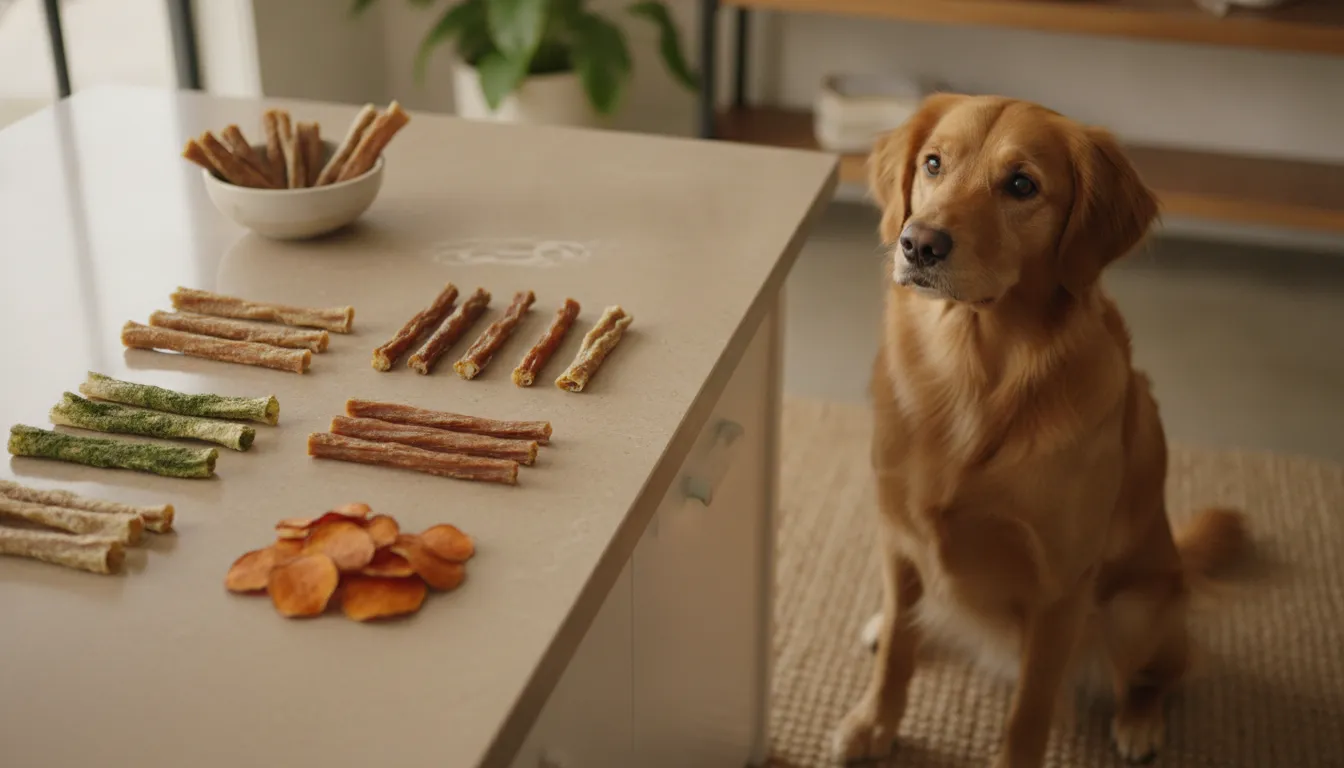
Neither format replaces brushing, oral checks, veterinary exams, or professional cleanings. The American Veterinary Medical Association advises owners to build home dental care alongside regular exams and professional cleaning. Chews should support that plan, not serve as the whole plan.
A practical routine pairs brushing with a suitable chew and regular veterinary care. For more context on daily oral care habits, review Navan's guide to fresh breath and dental routine basics before choosing a chew.
Why do processing and ingredient transparency matter?
A natural label can sound reassuring, but the ingredient list tells the fuller story. Owners should know what a chew contains, how it was made, and why each ingredient is there. Clear answers make it easier to choose natural dog chews that fit a simple daily wellness routine.
What a short label reveals
A single-ingredient chew leaves little room for guesswork. You can tell what your dog is eating without sorting through vague flavors, fillers, or a long list of additives. Whole-food sourcing also gives you a practical question to ask: can the maker trace the chew back to its source?
That clarity matters because the word natural does not explain the full process. Check whether a product is minimally processed, and look for clear details about sourcing and drying. Navan's limited-ingredient dental chew guide explains why a shorter label can make daily choices easier to evaluate.
Why added ingredients deserve a closer look
Binders and starches may help shape a chew, but they do not support ingredient simplicity. Navan's ingredient guidance also teaches that starches in chews can feed plaque-causing bacteria, which is why the brand favors single-ingredient options without unnecessary fillers.
Labels should name each ingredient in plain terms. Be cautious when a package relies on broad phrases instead of naming the food source or processing method. Ingredient literacy is not about fear. It is about choosing a daily chew with the same care you would bring to your own wellness routine.
Processing and the purpose of chewing
Minimal processing helps preserve the direct link between a whole-food source and the finished chew. It also makes it easier to judge texture, form, and fit for your dog. Those traits matter because chewing is a physical action, not just a way to deliver ingredients.
The published study on dental chews supports the role of chewing mechanics in oral care, but it also reinforces the importance of context. A chew belongs alongside brushing, regular checks, and professional veterinary cleanings. It is one layer of care, not a cure or replacement.
Compare Navan's single-ingredient chews if you want a shorter label and a clearer daily protocol.
How can chewing support a daily dental routine?
The role of chewing mechanics
Chewing gives your dog a hands-on way to support oral care between brushing sessions. As the chew moves across tooth surfaces, its texture creates mechanical contact. That contact can be useful when the chew is appropriate for the dog's mouth, chewing style, and supervision level.
Research on dental chews reported lower plaque thickness and calculus coverage among dogs given chews than dogs fed a control diet. The same study reported lower measures of bad breath and gum inflammation. These findings support chewing as one useful part of oral care, not a complete dental plan.
A complete daily routine
Natural dog chews work best when they have a clear place in a consistent routine. Offer an appropriate chew while supervising your dog, then remove it if it becomes small, sharp, or easy to gulp. Choose the size and texture with your dog's chewing style in mind.
Chewing does not replace brushing. Brush your dog's teeth with dog-safe toothpaste on a regular schedule, and never use human toothpaste. A simple routine is easier to maintain when brushing and chew time happen at familiar points each day.
- Check the mouth for changes before brushing.
- Brush with dog-safe toothpaste.
- Offer a suitable chew under supervision.
- Remove the chew when it becomes too small or changes texture.
- Keep regular veterinary dental visits.
Veterinary care and daily checks
Home care cannot reach or assess every part of the mouth. Keep regular veterinary oral exams and professional dental cleanings based on your veterinarian's advice. Chews should support that care, never replace it.
Watch for changes such as bad breath, broken teeth, unusual chewing, drooling, or less interest in food. If something changes, pause the chew and contact your veterinarian. Navan's article on whether dental chews are effective gives more context on what chewing can and cannot do.
Consistency matters more than treating chew time as an occasional event. Pair daily mechanical chewing with brushing, observation, and regular vet care. Together, these habits create a practical oral wellness protocol without asking one product to do every job.
How do you choose natural dog chews with confidence?
Start with the dog, not the package
A natural label does not tell you whether a chew fits your dog. Start with chewing style, body size, age, and dental history. A slow, careful chewer needs a different match than a dog that bites hard or tries to swallow large pieces.
Use this five-step check each time you buy natural dog chews. If your dog has broken teeth, sore gums, or other dental concerns, ask your veterinarian before offering a new chew.
Know the chewing style. Watch how your dog handles a familiar chew. Note whether they gnaw, crush, tear, or gulp. That pattern helps you avoid a chew that is too easy to swallow or too hard to work safely.
Read the full ingredient panel. Look for a short, clear list that names exactly what the chew contains. Single-ingredient options make that review simple. You can compare transparent options when you Shop All.
Match the size and supervise. Choose a piece that your dog cannot swallow whole at the start. Stay nearby during every session. Remove the chew when it becomes small enough to gulp, splinters, or develops sharp edges.
Avoid an unsafe mismatch. Do not assume the hardest option is the best choice for a strong chewer. Select a texture that allows steady gnawing without forceful biting. When uncertain, ask your veterinarian to review the chew and your dog's teeth.
Build a steady routine. Offer the chew on a set schedule and keep brushing as part of home care. Chews should support, not replace, regular oral care.
Review the fit over time
A good match can change as your dog ages or their chewing habits shift. Check the chew during use, then look at the mouth and gums afterward. Stop if you notice discomfort, bleeding, a damaged tooth, or a sudden change in chewing.
Keep notes on size, session length, and how much of the chew remains. This turns each session into useful feedback. Pair those observations with Navan's guide to the best natural dog dental chews and with regular veterinary dental exams.
Where do Navan chews fit in a wellness protocol?
A daily wellness tool
Navan frames natural dog chews as one part of a steady wellness protocol, not as ordinary treats. The single-ingredient approach keeps the routine simple and makes each chew's contents clear. It also gives health-conscious owners a practical way to build chewing into each day.
That focus reflects Navan's broader view of canine care: small, consistent habits support long-term wellness. Owners can explore Navan's product standards through the 5 products, one protocol collection. The goal is not a quick fix. It is a clear routine that owners can follow and adjust with their veterinarian.
Chewing alongside brushing
Chewing creates physical contact with tooth surfaces, while brushing lets owners clean the teeth in a more direct way. Research on dental chews found lower plaque thickness and halitosis among dogs given chews than dogs fed a control diet. These findings support chewing as one useful layer of home care, but they do not make brushing optional.
Owners should brush with dog-safe toothpaste and check the mouth for changes. Navan's ingredient label guide for dental chews explains why the source and structure of a chew matter as much as the product category.
The role of veterinary care
Natural dog chews do not replace oral exams, professional cleanings, or treatment for an existing dental problem. A veterinarian can assess areas below the gumline that owners cannot see. They can also help set a safe chewing routine based on a dog's size, bite, age, and dental history.
Use each chew as a supervised part of the wider protocol. Choose a size that suits the dog, watch how the dog chews, and remove pieces that become unsafe. Pause the routine and contact a veterinarian if the dog shows pain, bleeding, trouble chewing, or a sudden change in appetite.
A sound protocol works through repetition. Pair a suitable chew with brushing, routine mouth checks, a whole-food diet, and scheduled veterinary care. This balanced approach keeps the chew in its proper role: a simple wellness tool within a broader daily practice.
Frequently Asked Questions
What is the safest natural chew for dogs?
No natural chew is safest for every dog. Choose one that matches your dog's size, age, dental condition, and chewing strength. Supervise every session, and remove the chew when it becomes small enough to swallow. A short, clear ingredient list helps you judge what your dog is consuming. Ask your veterinarian before offering chews if your dog has damaged teeth, dietary restrictions, or digestive concerns.
What is the healthiest thing for a dog to chew?
The healthiest choice is usually a minimally processed, single-ingredient chew that suits your dog's size and chewing style. Its texture should encourage steady chewing without being so hard that it risks damaged teeth. Research on dental chews found lower plaque thickness, calculus, bleeding, and bad breath among dogs given chews than dogs fed a control diet. Chews still belong within a routine that includes brushing and veterinary care.
What is the best natural thing for dogs to chew on?
The best natural chew is one with a fully disclosed ingredient, clear sourcing, limited processing, and a form suited to your dog's chewing habits. Single-ingredient options make the label easier to assess, but suitability still depends on the individual dog. Introduce any new edible chew gradually, supervise each session, and stop if it causes discomfort, vomiting, loose stool, or difficulty chewing.
Can natural dog chews replace brushing?
No. Natural dog chews can add useful mechanical action, but they should not replace brushing, oral exams, or professional cleaning. The AVMA advises owners to build an at-home dental care routine with their veterinarian, alongside regular exams and professional cleanings. Use chewing as one consistent part of that broader routine.
Ready to make chewing part of a better routine?
A thoughtful chew choice makes daily dental care easier to maintain. Start with a transparent ingredient list, match the chew to your dog's mouth and chewing style, then keep brushing and veterinary care in the routine.
Ready to take the next step? Shop Navan's single-ingredient dog chews and build a daily protocol around clear sourcing, minimal processing, and consistent care.