

Best Dog Chews for Teeth: Why Mechanics Matter
The best dog chews for teeth are not defined by a clever shape or a dental label. Their usefulness comes from mechanics: a suitable texture, the right size, meaningful contact time, and active supervision. When those factors work together, chewing can help rub soft plaque and food debris from exposed tooth surfaces as part of a consistent oral wellness routine.
Shop Navan Pet's single-ingredient chews and choose a size that fits your dog's chewing style.
Quick answer: Look for a chew that is firm enough to create friction, but not so hard that it risks tooth damage. It should be large enough to discourage gulping and durable enough to encourage steady chewing. Chews support daily care; they do not replace brushing, veterinary exams, or professional dental cleanings.
What makes the best dog chews for teeth effective?
Chewing creates repeated contact between the chew and the tooth surface. That contact can act like a gentle scraping motion, especially around the back teeth a dog uses to grind. A soft snack that disappears in seconds creates little contact. An extremely hard object may create force without useful give. The goal is a middle ground: enough resistance to encourage chewing, with a texture that yields under pressure.
That distinction matters because canine enamel is thinner than human enamel. A study of dog dental anatomy measured enamel thickness from roughly 0.1 mm to 1 mm depending on the location. This is one reason owners should avoid assuming harder always means better. The useful question is whether a chew creates controlled friction without inviting forceful biting.
Ingredient choice also matters. A single-ingredient, minimally processed chew makes it easier to understand what your dog is consuming. Navan Pet frames chewing as one part of a daily wellness protocol rather than a replacement for professional care. For a broader ingredient-focused comparison, read the guide to single-ingredient dog chews.
Texture and density shape tooth contact
Texture determines how a chew meets the curves of a dog's teeth. A chew with some natural variation can create different points of contact as a dog repositions it. Density determines how quickly that chew breaks down. Together, the two factors influence whether a session becomes a quick swallow or a slower chewing ritual.
Look for useful firmness, not maximum hardness
A practical chew should have some give. Objects that feel rock-hard and do not yield can put unnecessary stress on teeth, particularly when a power chewer bites straight down. Owners can inspect a chew before each session and watch how it changes as it softens. If a dog repeatedly bites with loud, forceful cracks rather than working the chew, stop the session and choose a different texture.
Match density to chewing style
Gentle nibblers and determined power chewers do not need the same experience. A lighter chew may offer enough resistance for a small or careful dog. A stronger chewer may need a denser option that encourages gradual work. The best match is the one that keeps the dog engaged without becoming an immediate swallowing risk or an unyielding object.
| Factor | What to look for | Why it matters |
|---|---|---|
| Texture | Natural variation with some give | Creates changing points of tooth contact |
| Size | Larger than the dog's easy swallowing range | Discourages gulping and supports grip |
| Duration | Steady chewing rather than a quick swallow | Allows repeated mechanical contact |
| Supervision | Owner remains present and attentive | Allows quick removal if the chew becomes unsafe |
How do you choose the right chew size?
Start with the dog's body size, jaw strength, and usual chewing behavior. A chew should be large enough that the dog cannot immediately fit the entire item in its mouth. It should also be manageable enough for the dog to hold and reposition. That movement changes the chewing angle and helps different teeth meet the surface.
Watch the first several sessions closely. Some dogs nibble from one end, while others try to crush or gulp. A gulper generally needs a larger option and more hands-on management. Remove any chew once the remaining piece becomes small enough to swallow whole. For dogs suited to its size and texture, Navan Pet's duck wing for dogs offers a single-ingredient option to consider within a supervised routine.
A six-step selection check
- Consider your dog's body size and jaw strength.
- Choose a chew wider than the dog's easy swallowing range.
- Confirm the dog can grip and reposition it.
- Watch whether the dog nibbles, shreds, crushes, or gulps.
- Reassess the texture as the chew softens.
- Remove the final piece before it becomes a swallowing risk.
Compare Navan Pet chew options for different sizes and chewing styles.
Chewing time and daily consistency matter
Mechanical cleaning depends on repeated contact. A chew swallowed quickly has little opportunity to rub along tooth surfaces. A steadier session gives a dog time to work different sides of the mouth and use the back teeth. There is no single ideal number of minutes for every dog, so quality of chewing matters more than chasing a fixed time.
Consistency matters for the same reason. Plaque develops continually, so oral care works best as a routine. Chewing can complement brushing and regular veterinary dental care, but it cannot clean every surface or reach below the gumline. The American Veterinary Medical Association's dental-care guidance explains why owners should maintain home care and schedule veterinary evaluation when they notice oral changes.
What does a safe supervised chew session look like?
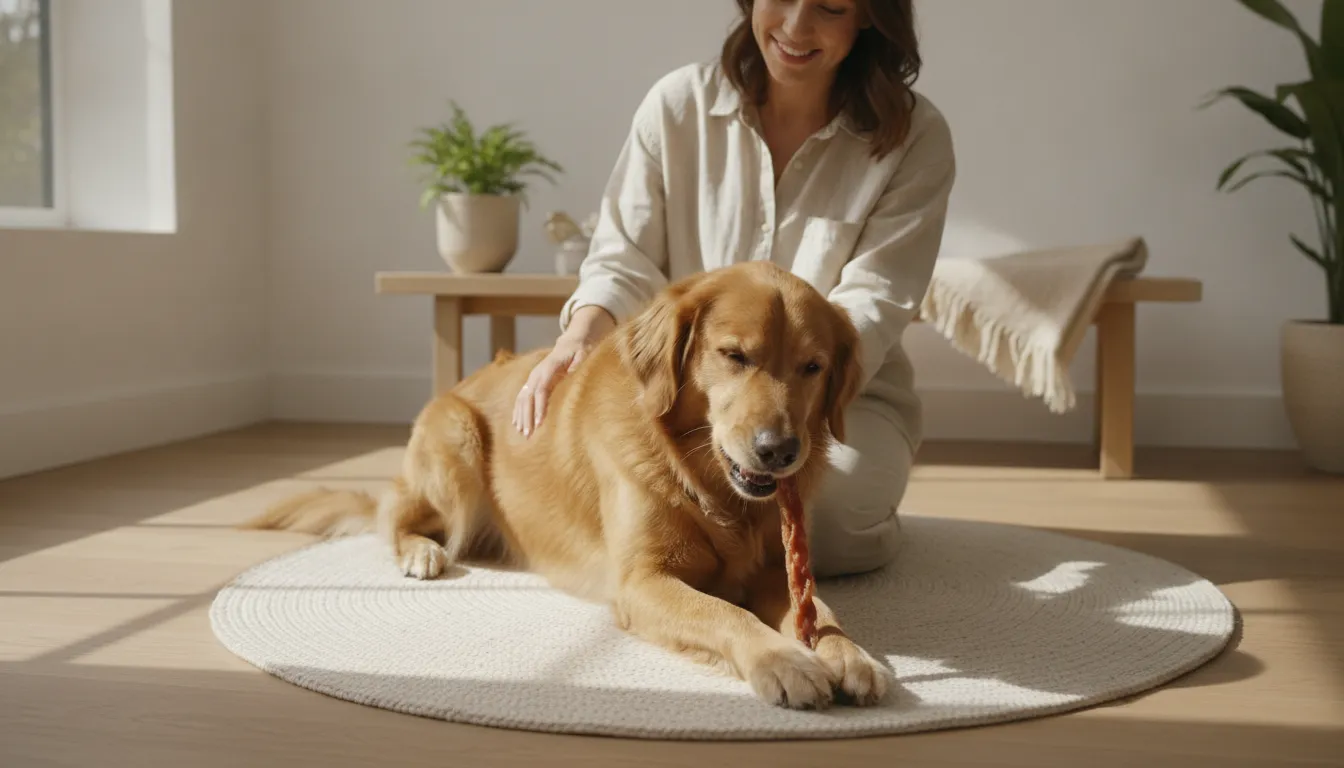
A safe session begins in a calm area where you can stay close. Inspect the chew, offer it to your dog, and observe the first bites. Look for steady gnawing and repositioning rather than frantic swallowing. Pay attention to sharp fragments, sudden changes in texture, and the size of the remaining piece.
Supervision is active, not simply being somewhere in the house. Stay able to remove the chew promptly. If your dog guards chews, work with a qualified trainer on safe trading rather than grabbing the item. Stop and speak with your veterinarian if you see mouth pain, bleeding, a damaged tooth, difficulty chewing, or a sudden change in chewing behavior.
When to remove the chew
- The remaining piece can fit fully inside the dog's mouth.
- The chew develops a sharp edge or breaks unpredictably.
- The dog begins gulping or biting with excessive force.
- The dog appears tired, uncomfortable, or unusually protective.
Build a complete oral wellness ritual
The best dog chews for teeth fit into a larger system. Choose a clean, appropriately sized chew; supervise the session; brush consistently with dog-safe toothpaste; and maintain regular veterinary dental care. Never use human toothpaste for dogs because ingredients such as xylitol can be toxic.
This protocol-based approach keeps expectations realistic. A chew can support mechanical cleaning and give dogs an enriching daily activity. It cannot treat dental disease or replace professional cleaning. Quiet consistency, ingredient transparency, and close observation create the strongest foundation for long-term oral wellness.
Frequently Asked Questions
What is the best thing for dogs to chew on for their teeth?
Choose a properly sized chew with useful firmness and enough lasting texture to create tooth contact. A single-ingredient, minimally processed chew can support a daily oral wellness ritual when used with supervision, brushing, and veterinary care.
Do dental chews replace brushing or veterinary cleanings?
No. Chews can support mechanical cleaning on exposed tooth surfaces, but they do not replace brushing, veterinary examinations, or professional dental cleanings.
How long should a dog chew for dental benefit?
There is no universal session length. The useful session is long enough to create repeated tooth contact while the owner actively supervises and removes the chew before it becomes a gulping risk.
How do I know when to take a chew away?
Remove the chew when it becomes small enough to swallow whole, develops unsafe sharp edges, or causes your dog to gulp, guard, or bite with excessive force.
Choose a chew for your dog's daily ritual
Texture, sizing, contact time, and supervision turn chewing into a thoughtful wellness practice. Shop all Navan Pet chews to explore single-ingredient options designed for a consistent routine.