

Dog Dental Water Additive: An Ingredient-Aware Guide
A dog dental water additive can be convenient, but convenience does not tell you whether a formula belongs in your dog's daily wellness routine. The useful question is not simply whether an additive promises fresher breath. It is whether the full ingredient list is transparent, the finished product has credible evidence, and your dog will continue drinking normally.
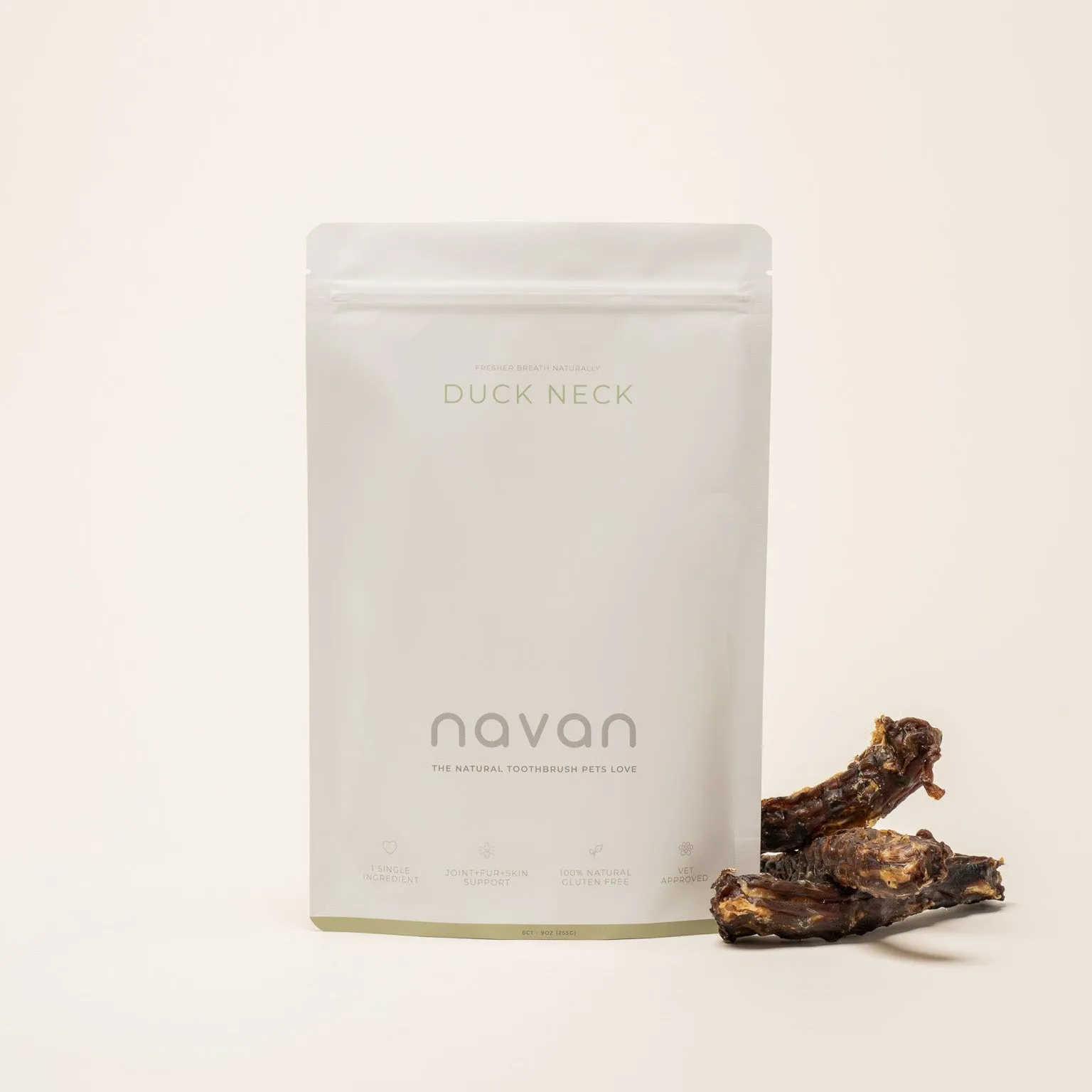
Build a cleaner daily oral-care ritual with Navan Pet's single-ingredient chews.
A dog dental water additive is a liquid mixed into drinking water as a passive oral-care step. It may support breath or plaque control, depending on the finished formula and evidence. It cannot provide the friction of brushing or appropriate chewing, remove hardened tartar, or replace veterinary dental care.
This ingredient-aware guide explains what these additives can realistically do, what to check before adding anything to the bowl, and how to keep mechanical cleaning at the center of a thoughtful routine.
What is a dog dental water additive?
A dog dental water additive is diluted in a dog's drinking water according to the product directions. As the dog drinks, the solution passes over some tooth and gum surfaces. That makes it a passive tool: it requires no brushing motion and produces no chewing friction.
Formulas and intended benefits vary. Some are marketed for breath, while others make plaque or tartar-control claims. Those claims should be evaluated at the finished-product level. One familiar ingredient does not prove that a complete formula will perform as advertised.
Why passive contact has limits
Water follows the easiest path through the mouth. It does not reliably scrub every tooth surface or reach plaque with enough force to dislodge it. Once plaque has hardened into tartar, a rinse is not a substitute for evaluation and professional care from your veterinarian.
Think of an additive as an optional supporting layer, not the foundation of oral care. Direct brushing, appropriate mechanical chewing, routine mouth checks, and regular veterinary dental care each do work that a liquid cannot.
How should you read a dental water additive label?
Start with the back of the bottle, not the promise on the front. A clear label should identify every ingredient, explain directions and dilution, and make it easy to understand what the finished product is designed to do. If the label relies on vague blends or broad wellness language, you do not have enough information to make a confident daily-use decision.
| Label check | What to look for | Why it matters |
|---|---|---|
| Complete ingredients | Specific, recognizable ingredient names | Your dog will consume the diluted formula whenever they drink |
| Clear directions | Exact dilution and water-replacement instructions | More is not better, and stale water should still be replaced |
| Finished-product evidence | Support tied to the exact formula and claim | Ingredient-level claims do not automatically transfer to a product |
| Independent acceptance | A specific product listed by the Veterinary Oral Health Council | Acceptance applies only to the listed product and intended benefit |
Ingredients and signals that deserve scrutiny
Never use a product containing xylitol. The U.S. Food and Drug Administration warns that xylitol is toxic to dogs. Also question vague flavors, colors, sweeteners, and any nonessential ingredient whose purpose is not clearly explained.
Look beyond statements such as "natural" or "fresh breath." Those words do not tell you the concentration, evidence, or suitability of a formula. If a product carries a seal, confirm the exact item on the Veterinary Oral Health Council accepted-products list. Then ask your veterinarian whether it fits your individual dog's needs.
What can a dog dental water additive realistically do?
A carefully chosen additive may support one part of a broader routine. Depending on the exact formula and available evidence, it may help manage breath or support plaque control. Its convenience may also make it easier for some owners to maintain a consistent supporting step.
The boundary is equally important: an additive cannot scrub teeth, remove hardened tartar, examine the gum line, or resolve the underlying cause of persistent bad breath. It should never reduce your dog's water intake. If the taste or smell causes your dog to avoid the bowl, stop using it and restore plain, fresh water.
Fresh breath is not the same as a clean mouth
A temporary change in odor does not prove that plaque or tartar has been addressed. Persistent or suddenly worsening breath deserves attention because the source may require a veterinary exam rather than another freshening product. Navan's guide to what causes bad breath in dogs explains why odor should be treated as information, not merely covered up.
Watch for changes such as reluctance to eat, dropping food, pawing at the mouth, bleeding gums, or visible buildup. Contact your veterinarian when you notice these signs or have concerns about your dog's oral health.
How do brushing and chewing fit into the routine?
Brushing remains the most direct at-home way to disrupt plaque on tooth surfaces. Use a dog-safe toothbrush and toothpaste recommended for dogs. Never use human toothpaste, because some formulations may contain ingredients that are unsafe for pets.
Appropriate chewing provides a different kind of mechanical action. Texture and chewing motion can help contact tooth surfaces in a way that passive water cannot. Choose chews that suit your dog's size and chewing style, supervise every session, and remove pieces that become small enough to swallow.
See how to choose natural dog dental chews with simple, transparent ingredients.
Why ingredient simplicity matters
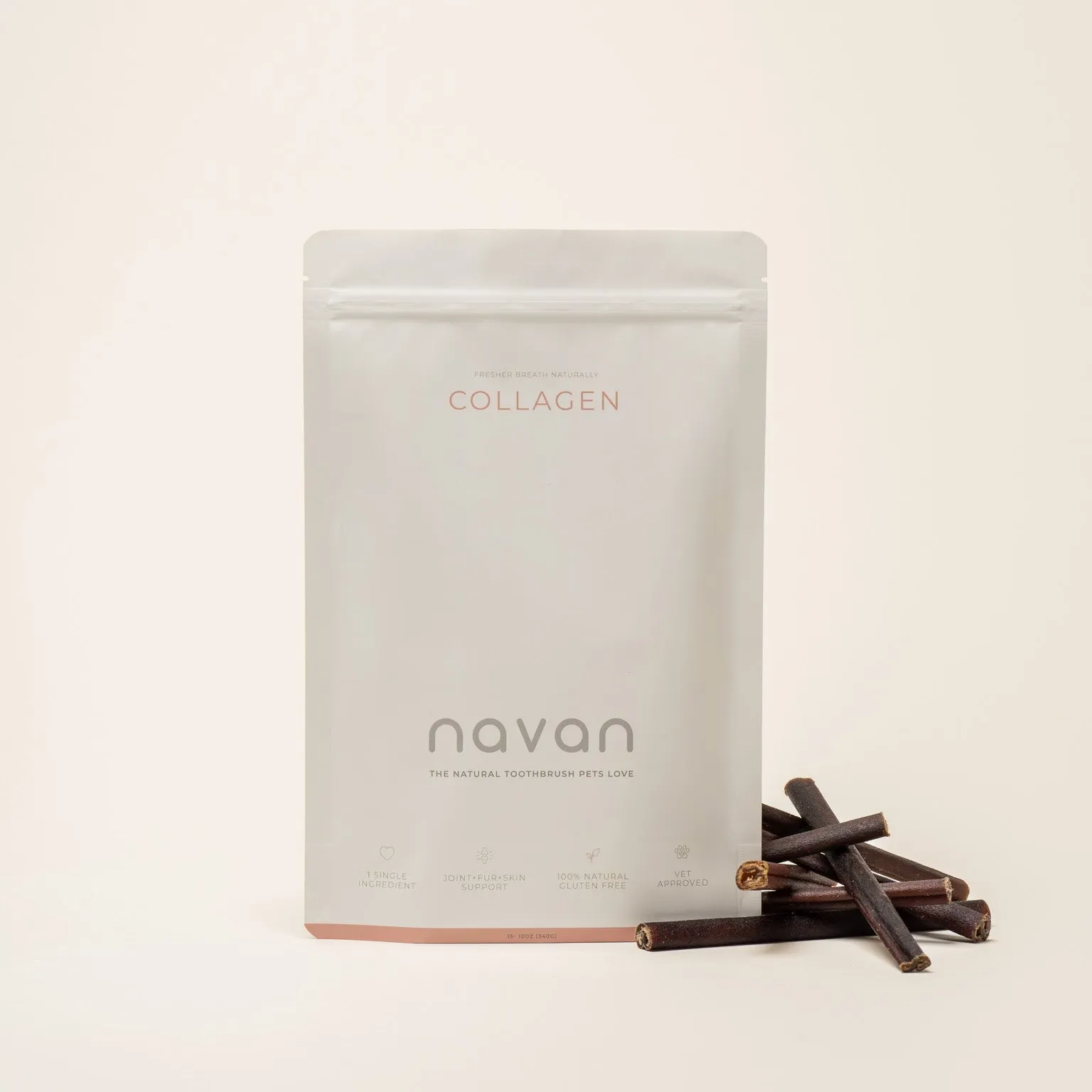
Every daily product becomes part of the dog's broader wellness protocol. Navan favors minimally processed, single-ingredient chews because transparency makes it easier to understand what a dog is consuming. That same standard belongs at the water bowl: read every ingredient and question anything unnecessary.
Chews do not replace brushing or professional veterinary dental cleanings. They are one practical part of a consistent routine that connects oral care with whole-body wellness.
A practical decision checklist before you buy
Use this sequence before adding a new product to your dog's drinking water:
- Start with the full label. Identify every ingredient and avoid xylitol.
- Define the intended benefit. Decide whether you are evaluating a breath claim, a plaque claim, or another specific purpose.
- Check the evidence. Look for support tied to the finished product, not just general claims about an ingredient.
- Ask your veterinarian. Confirm the formula is appropriate for your dog's age, health, medications, and existing dental needs.
- Follow the directions exactly. Use the labeled dilution and continue replacing drinking water regularly.
- Monitor hydration and comfort. Stop if your dog drinks less or shows an unexpected reaction.
- Keep mechanical care in place. Continue brushing, appropriate supervised chewing, and veterinary dental care.
This framework separates an informed decision from a convenience-driven purchase. If a label is vague, the evidence is unclear, or the product changes drinking behavior, plain fresh water is the better choice while you consult your veterinarian.
Frequently asked questions
Can a dog dental water additive replace brushing?
No. An additive is passive and cannot provide the physical contact of brushing. Treat it only as an optional supporting step within a routine that keeps direct mechanical cleaning in place.
Can a water additive remove tartar?
A home water additive should not be expected to remove hardened tartar. Ask your veterinarian to assess visible buildup and recommend appropriate professional care.
How do I know whether a product has credible evidence?
Look for studies or independent acceptance tied to the exact finished product and its specific claim. Confirm any Veterinary Oral Health Council seal against the organization's current accepted-products list.
What if my dog drinks less after I add the product?
Stop using it and offer fresh, plain water. Hydration takes priority over any optional oral-care product. Contact your veterinarian if reduced drinking continues.
Should I use an additive for persistent bad breath?
Persistent or suddenly worsening breath may warrant a veterinary exam. A product that changes odor does not necessarily address its underlying cause.
Make the daily ritual simple and transparent
The strongest oral wellness routine is not built around a shortcut. It is built around repeatable habits: brushing, supervised mechanical chewing, fresh water, ingredient literacy, and veterinary care. If you choose a dog dental water additive, apply the same high standard you would use for anything your dog consumes every day.
Shop Navan Pet's single-ingredient chews and build a cleaner daily wellness ritual.