

Good Dental Chews for Dogs: A Label-First Guide
Good Dental Chews for Dogs: A Label-First Guide
Good dental chews for dogs should be easy to understand before they ever reach your dog's mouth. Start with a short, transparent ingredient list, then assess texture, size, processing, and how the chew fits alongside brushing and professional veterinary dental care. This label-first approach helps you choose a chew for your individual dog rather than relying on broad package claims.
Shop Navan's single-ingredient chews
The short answer: A good dental chew is made from clearly identified ingredients, creates safe chewing contact with the teeth, suits the dog's size and chewing style, and is always given under supervision. No chew replaces toothbrushing, mouth checks, or veterinary dental care.
What makes a good dental chew for dogs?
The useful question is not whether a package says "dental." It is whether the chew meets a set of criteria you can verify. Ingredient-literate owners can use five checks: ingredient clarity, minimal processing, appropriate chewing resistance, correct sizing, and compatibility with a complete oral-care routine.
| Criterion | What to look for | Why it matters |
|---|---|---|
| Ingredient list | One clearly named whole-food ingredient | Makes the chew easier to evaluate |
| Processing | Minimal processing with no unnecessary binders | Preserves a simple, transparent format |
| Chewing fit | Texture and density matched to the dog | Encourages deliberate chewing rather than gulping |
| Size | Larger than the dog can swallow whole | Supports safer supervised use |
| Routine fit | Used with brushing and veterinary care | Keeps the chew in its proper supporting role |
A chew can pass one check and fail another. A simple ingredient list does not make an undersized chew appropriate for a powerful chewer. Likewise, a well-sized chew does not make a long list of fillers easier to assess. Consider the criteria together.
How should you read a dental chew label?
Read the ingredient panel before the front of the package. Ideally, the panel names one recognizable animal ingredient. A short list gives you less to decode and makes it easier to understand what your dog is chewing. It also supports more informed conversations with your veterinarian if your dog has dietary sensitivities or special health needs.
Prefer ingredient clarity
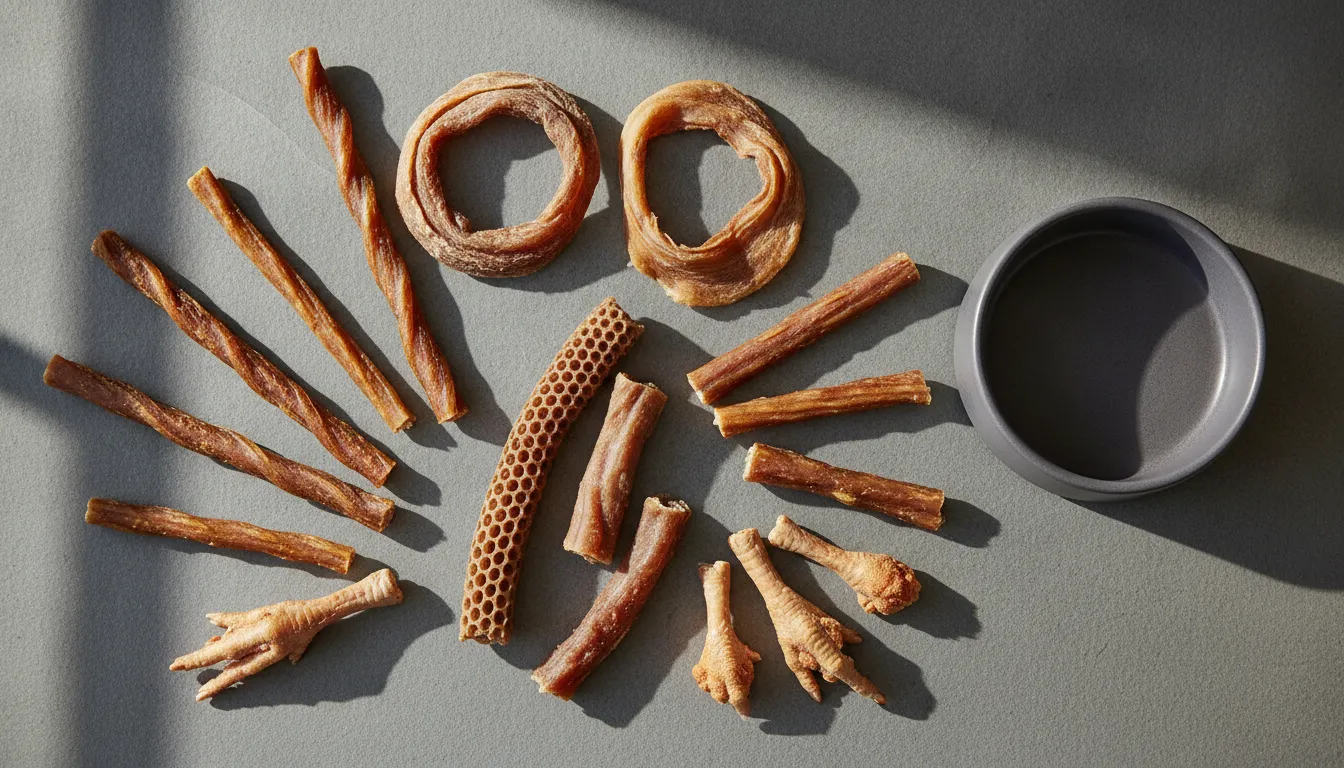
Terms such as "natural" can sound reassuring, but the ingredient panel is more useful than a broad claim. Look for a clearly identified source rather than vague flavoring or an unexplained blend. Navan's approach is built around single-ingredient, minimally processed chews, so owners can quickly understand what is in each product.
Notice what creates the texture
Some shaped chews depend on starches, binders, sweeteners, colors, or preservatives to hold their form. Owners who want a whole-food approach may prefer a chew whose shape and texture come from the ingredient itself. The goal is not to judge a product by appearance. It is to understand how that product was made.
Look for sourcing transparency
Clear sourcing and processing information signal that a brand expects close scrutiny. If important details are difficult to find, ask the manufacturer before purchasing. Ingredient literacy is a practical wellness habit, not a search for a perfect label.
How do you match a chew to your dog?
The same chew will not suit every dog. Age, dental condition, jaw strength, chewing habits, size, and dietary needs all affect fit. A deliberate, methodical chewer may handle a different texture than a dog that tries to break and swallow large pieces quickly.
- Observe chewing style: Does your dog gnaw slowly, crush forcefully, or try to gulp?
- Choose an appropriate size: Start with a chew too large to swallow whole.
- Assess density: Avoid products that seem likely to be too hard for your dog's teeth.
- Supervise from start to finish: Remove the chew if it becomes small enough to swallow or develops sharp edges.
- Ask your veterinarian: Get individualized advice for puppies, seniors, dogs with dental work, and dogs with medical or dietary concerns.
A chew should invite controlled mechanical contact as the dog gnaws. It should not become a contest of force. If your dog repeatedly tries to gulp, fractures pieces, or shows discomfort, remove the chew and reassess the format with your veterinarian.

Where do chews fit in a complete dental routine?
Dental chews are one supporting part of oral care. Research on periodontal disease in dogs reinforces the value of consistent home care and professional assessment. For a deeper evidence review, see this peer-reviewed overview of periodontal disease in dogs.
- Brush consistently with toothpaste made specifically for dogs.
- Use a suitable chew as a supervised addition to the routine.
- Check the mouth weekly for changes in breath, gums, teeth, comfort, or chewing behavior.
- Schedule veterinary exams and professional dental care based on your veterinarian's guidance.
Navan frames chewing as a daily wellness protocol because consistency matters. That does not mean a chew replaces brushing or professional cleanings. It means chewing can have a clear place within a broader routine. Explore the Navan Dental Protocol to see how the brand approaches consistency, or read about practical ways to support fresher dog breath.
Compare Navan's single-ingredient chew options
How can you use every chew more thoughtfully?
Supervision is active, not passive. Stay close enough to see how the chew changes and how your dog responds. Remove it when it becomes small enough to swallow, develops sharp points, or causes your dog to bite with excessive force. Provide fresh water and follow the product's feeding guidance.
Reassess over time. A chew that suited a dog last year may not suit the same dog after dental work, a change in chewing behavior, or a new health concern. The best choice is always specific to the dog in front of you.
When comparing good dental chews for dogs, choose clarity over slogans. A transparent ingredient, thoughtful processing, an appropriate chewing fit, and consistent supervision form a stronger decision framework than any single marketing claim.
Frequently asked questions
Can dental chews replace brushing a dog's teeth?
No. Dental chews can support a broader oral-care routine, but they do not replace brushing or professional veterinary dental care. Ask your veterinarian how often to brush and when your dog needs an exam or cleaning.
Are single-ingredient chews right for every dog?
No chew is right for every dog. Single-ingredient chews make the contents easier to understand, but you still need to consider size, density, chewing style, dietary needs, dental condition, and veterinary guidance.
How often should a dog have a dental chew?
Follow the product directions and your veterinarian's advice. Frequency should account for the chew's size, your dog's overall diet, calorie needs, chewing behavior, and health history.
When should you take a chew away?
Remove it if it becomes small enough to swallow, develops sharp edges, breaks into concerning pieces, or causes discomfort. Also remove it if your dog tries to gulp rather than chew it.
What should you avoid in a dental chew?
Avoid any chew that is poorly sized for your dog or lacks enough information to assess safely. Ingredient-literate owners may also choose to avoid starches, fillers, artificial colors, and vague flavoring when seeking a minimally processed whole-food option.
Choose a simpler daily chew
A label-first decision is both simple and demanding: know the ingredient, understand the processing, match the chew to the dog, supervise every session, and keep brushing and veterinary care in the routine. If a single-ingredient approach fits your dog's needs, shop all Navan chews.